ERICH HECKEL German, 1883-1970

"What we had to get away from was clear to us. But where we were going to end up was less clear."
Erich Heckel (1883 in Döbeln – 1970 in Radolfzell) was a central figure of German Expressionism and a founding member of the artist group Die Brücke. Heckel’s work is characterized by an expressive, often raw visual language with strong contours and intense color. His key motifs include landscapes, figures, and scenes from everyday life, translated into emotionally charged and immediate compositions. In addition to painting, his oeuvre includes printmaking and drawing, particularly woodcuts, which are considered among the most significant achievements of Expressionism. His works are held in major international collections, including the Museum of Modern Art in New York, the Tate Galleryin London, the Centre Pompidou, and the Städel Museum.
-
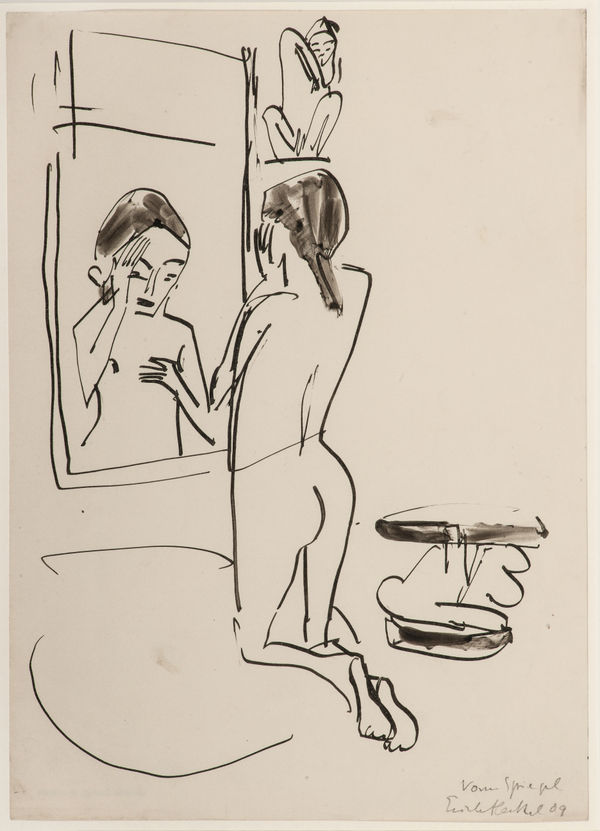
 ERICH HECKELVorm Spiegel, 1909Ink and watercolor on paper35,4 x 25,4 cm
 -
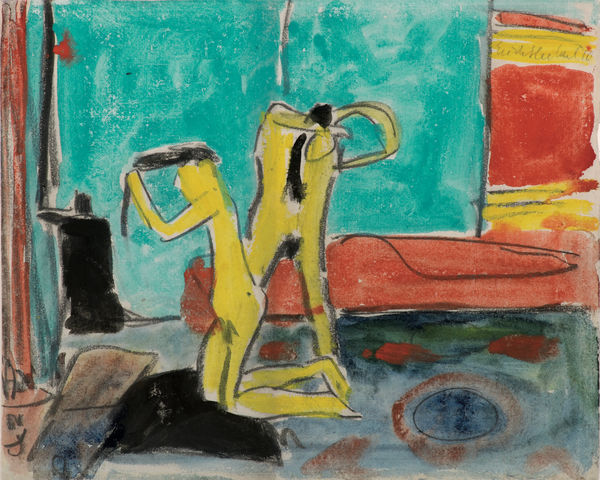
ERICH HECKELZwei Akte im Dresdner Atelier, 1910Watercolor and crayon on velin paper33,6 x 41,7 cm
13 x 16 1/8 in -
ERICH HECKELFrau am Wasser, 1911Watercolor and pencil on paper27,5 x 33,5 cm
10 5/8 x 13 in